
A compact black case, soft keys, and a stripe of rainbow colors. The ZX Spectrum is instantly recognizable, recalling a time when one television could become a games room, a laboratory, and a first introduction to programming.
1982: bringing computing closer
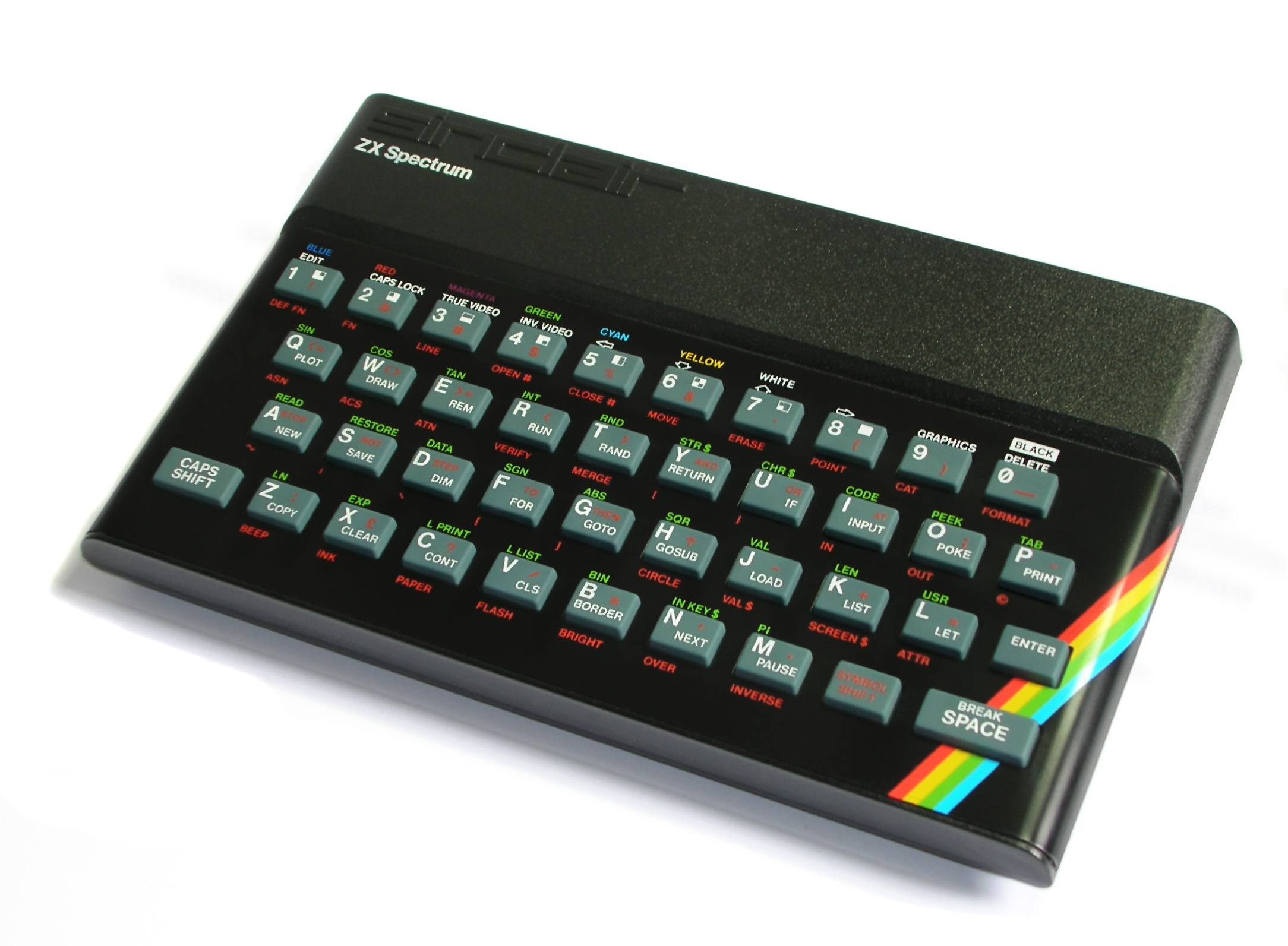
Sinclair Research introduced the ZX Spectrum in Britain in spring 1982. It continued the home-computing direction established by the ZX80 and ZX81, adding color and richer possibilities for games. Cambridge’s Centre for Computing History credits its recognizable industrial design to Rick Dickinson.[1]
A contemporary review in the June 1982 issue of Personal Computer World lists two launch versions: 16 KB at £125 and 48 KB at £175. A normal television served as the display. Those choices help explain the product: make home computing more affordable, then let owners discover what they wanted to do with it.[2]
A keyboard with its own language
The Spectrum greeted its owner with BASIC rather than an application library. Commands and extra symbols were printed on the keys, with input depending on the current mode. The manufacturer’s manual introduced variables, conditions, loops, graphics, and sound in successive chapters.[3]
It took practice, but experimentation was built into the experience. You could load a finished game, then try changing a small example from a book. Moving from using a computer to writing something for it did not require a separate store of development tools. The keyboard was already right in front of you.
When limitations become a style
On the original Spectrum, color was not assigned independently to every pixel: attributes grouped pixels into the familiar 8 × 8 blocks. When objects met inside a block, their colors could affect one another. The original manual’s color chapter explains the rules behind this display.[4]
Artists had to consider how a picture would move. Silhouettes, contrast, detail placement, and a restricted palette became part of game design. Preserving a Spectrum image therefore involves more than keeping it small. Its character also comes from the way the display was organized and the compromises made around it.
A cassette as a doorway
Programs loaded from a cassette recorder. The 1982 review even describes finding a suitable volume level. Sinclair’s manual documents commands for loading, saving, and verifying tape data: an ordinary cassette was being used as a software medium.[2][5]
The wait can feel inconvenient today, yet it created an unusual sense of anticipation: prepare the recording, watch for the picture, and hope loading finishes. It is useful to distinguish the original medium from today’s launch method. A tape image preserves loading information; a snapshot returns the computer to a particular state already reached.
Worlds in a small space
A Spectrum screen could become a maze, a space scene, a sports ground, or a room of puzzles. One example of this culture’s place in museum collections is the Science Museum Group’s Knight Lore cassette for the 48K Spectrum. The museum dates this object to 1984.[6]
These games reward attention beyond nostalgia. Notice how a character stands apart from the background, whether the goal is clear without lengthy instruction, and how a handful of rooms suggests a larger world. This is a distinctive design language in which the creator must decide which details the player really needs.
128K: a familiar idea grows
The Spectrum 128 was developed with Sinclair’s Spanish distributor Investrónica. It appeared in Spain in 1985 and went on sale in Britain in 1986. Additions included 128 KB of memory and an AY-3-8912 three-channel sound chip. Its large right-hand heatsink makes the hardware particularly recognizable.[7]
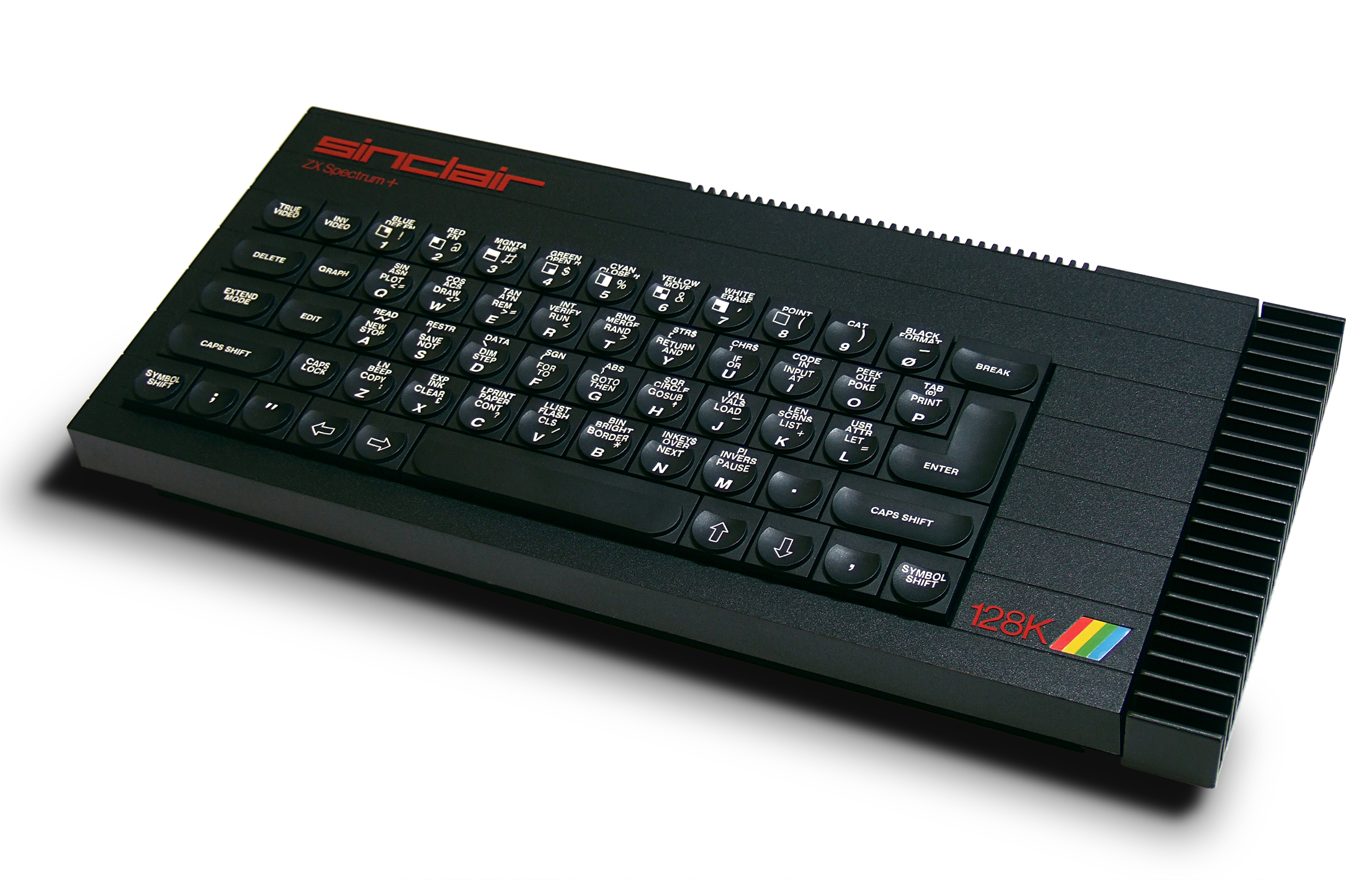
This distinction matters in a catalog. Versions sharing a title can target different machines and use memory or sound differently. When choosing an image, pay attention to 48K and 128K labels. They identify the computer the program was prepared for, rather than a decorative addition to its name.
Preserving the chance to play
A computer’s history includes its case, documentation, programs, and the ways people used them. A photograph reveals the keyboard and connectors; a manual explains constraints; a game lets you experience the developers’ decisions. Together they tell more than a nostalgic image on its own.
On ZX-GAME, start with a game. Choose a familiar title or an unknown card, read its controls, and try the first screen. To understand why it works that way, return to the sources below. Some were written while the machine itself was still new.
Sources
- The Centre for Computing History: Sinclair launches the ZX Spectrum. Museum chronology.
- David Tebbutt, Personal Computer World, June 1982. Contemporary review preserved by Planet Sinclair.
- Sinclair ZX Spectrum BASIC Programming. Original manufacturer’s manual, World of Spectrum archive.
- Sinclair manual, chapter 16: color.
- Sinclair manual, chapter 20: tape storage.
- Science Museum Group: Knight Lore for the 48K Spectrum. Collection record.
- The Centre for Computing History: Sinclair ZX Spectrum 128. Hardware collection record.